
Data Protection Principles
Overview
Section titled “Overview”Understanding how to properly classify, handle, and protect data is fundamental to cloud security and compliance.
Data Classification Pyramid
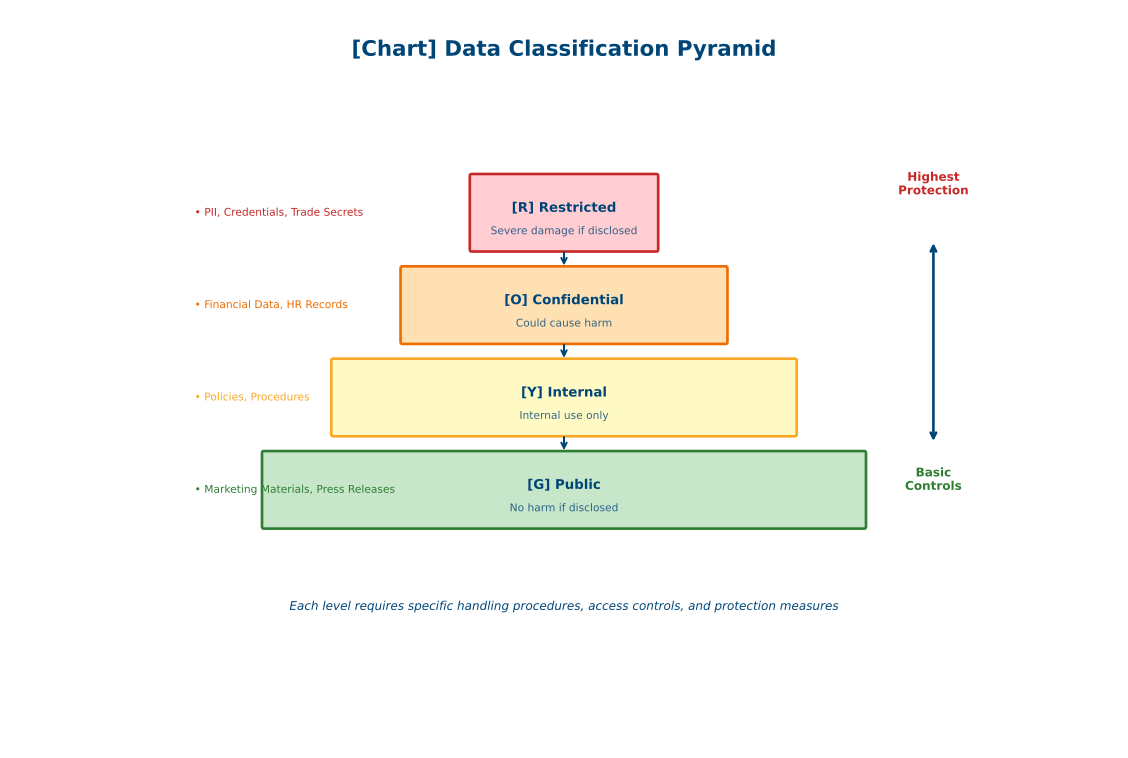 Figure: Data classification levels from Restricted (highest protection) to Public (basic controls)
Data Classification Framework
Section titled “Data Classification Framework”Classification Levels
Section titled “Classification Levels”- Public: No harm if disclosed (marketing materials)
- Internal: For internal use only (policies, procedures)
- Confidential: Could cause harm if disclosed (financial data)
- Restricted: Severe damage if disclosed (personal data, secrets)
Data Handling Requirements
Section titled “Data Handling Requirements”Each classification level requires specific handling procedures, access controls, and protection measures.
Data Protection Methods
Section titled “Data Protection Methods”Encryption
Section titled “Encryption”- At Rest: Protects stored data
- In Transit: Protects data during transmission
- In Use: Protects data during processing
Access Controls
Section titled “Access Controls”- Role-based access control (RBAC)
- Attribute-based access control (ABAC)
- Just-in-time access for privileged operations
Data Loss Prevention (DLP)
Section titled “Data Loss Prevention (DLP)”- Monitor data movement
- Prevent unauthorized disclosure
- Alert on policy violations
Privacy Principles
Section titled “Privacy Principles”Data Minimization
Section titled “Data Minimization”Collect and process only necessary data for specific purposes.
Purpose Limitation
Section titled “Purpose Limitation”Use data only for stated, legitimate purposes.
Storage Limitation
Section titled “Storage Limitation”Retain data only as long as necessary.
Next Steps
Section titled “Next Steps”Continue to Compliance Frameworks to understand regulatory requirements.
Last Updated: November 2025