
Identity and Access Basics
Overview
Section titled “Overview”Identity and Access Management (IAM) is the foundation of cloud security, controlling who can access what resources and under what conditions.
Authentication vs Authorization Flow
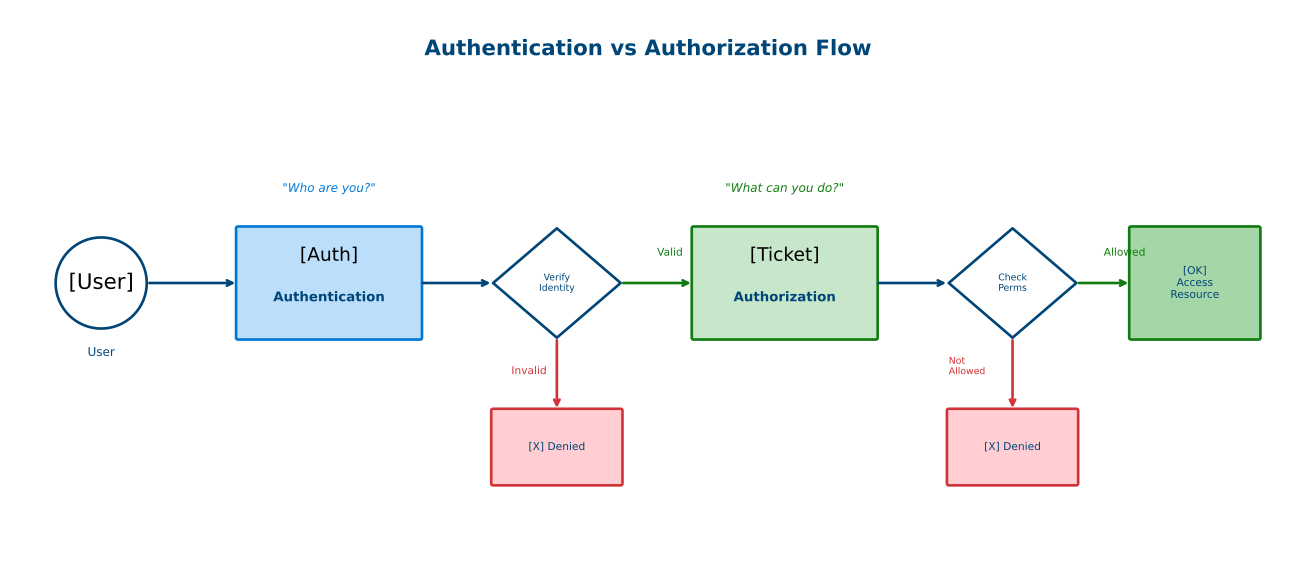 Figure: Authentication verifies identity; Authorization determines permissions
Core Concepts
Section titled “Core Concepts”Authentication vs Authorization
Section titled “Authentication vs Authorization”- Authentication: Verifying identity (“Who are you?”)
- Authorization: Determining permissions (“What can you do?”)
Identity Types
Section titled “Identity Types”- Human Identities: Users, administrators, developers
- Service Identities: Applications, services, APIs
- Device Identities: Computers, mobile devices, IoT devices
Authentication Methods
Section titled “Authentication Methods”Single-Factor Authentication
Section titled “Single-Factor Authentication”- Passwords, PINs, security questions
- Vulnerable to compromise
- Not recommended for sensitive systems
Multi-Factor Authentication (MFA)
Section titled “Multi-Factor Authentication (MFA)”- Knowledge: Something you know (password)
- Possession: Something you have (phone, token)
- Inherence: Something you are (biometrics)
Modern Authentication
Section titled “Modern Authentication”- OAuth 2.0 and OpenID Connect protocols
- Token-based authentication
- Single sign-on (SSO) capabilities
Access Control Models
Section titled “Access Control Models”Role-Based Access Control (RBAC)
Section titled “Role-Based Access Control (RBAC)”- Permissions assigned to roles
- Users assigned to roles
- Simplifies permission management
Attribute-Based Access Control (ABAC)
Section titled “Attribute-Based Access Control (ABAC)”- Dynamic permissions based on attributes
- Context-aware access decisions
- Fine-grained control capabilities
Just-in-Time (JIT) Access
Section titled “Just-in-Time (JIT) Access”- Temporary elevated permissions
- Time-bound access grants
- Reduces standing privileges
Identity Governance
Section titled “Identity Governance”Access Reviews
Section titled “Access Reviews”- Regular review of user permissions
- Removal of unused access
- Compliance with least privilege
Lifecycle Management
Section titled “Lifecycle Management”- User onboarding and offboarding
- Role changes and transitions
- Automated provisioning and deprovisioning
Cloud Identity Considerations
Section titled “Cloud Identity Considerations”Federation
Section titled “Federation”- Trust relationships between identity providers
- Single sign-on across multiple systems
- Centralized identity management
Zero Trust Architecture
Section titled “Zero Trust Architecture”- Never trust, always verify
- Continuous authentication and authorization
- Assume breach mentality
Next Steps
Section titled “Next Steps”Complete the Security & Compliance Knowledge Check to test your understanding.
Last Updated: November 2025