Monitoring, Compliance & Operational Excellence
Overview
View Diagram: Security Monitoring Flow
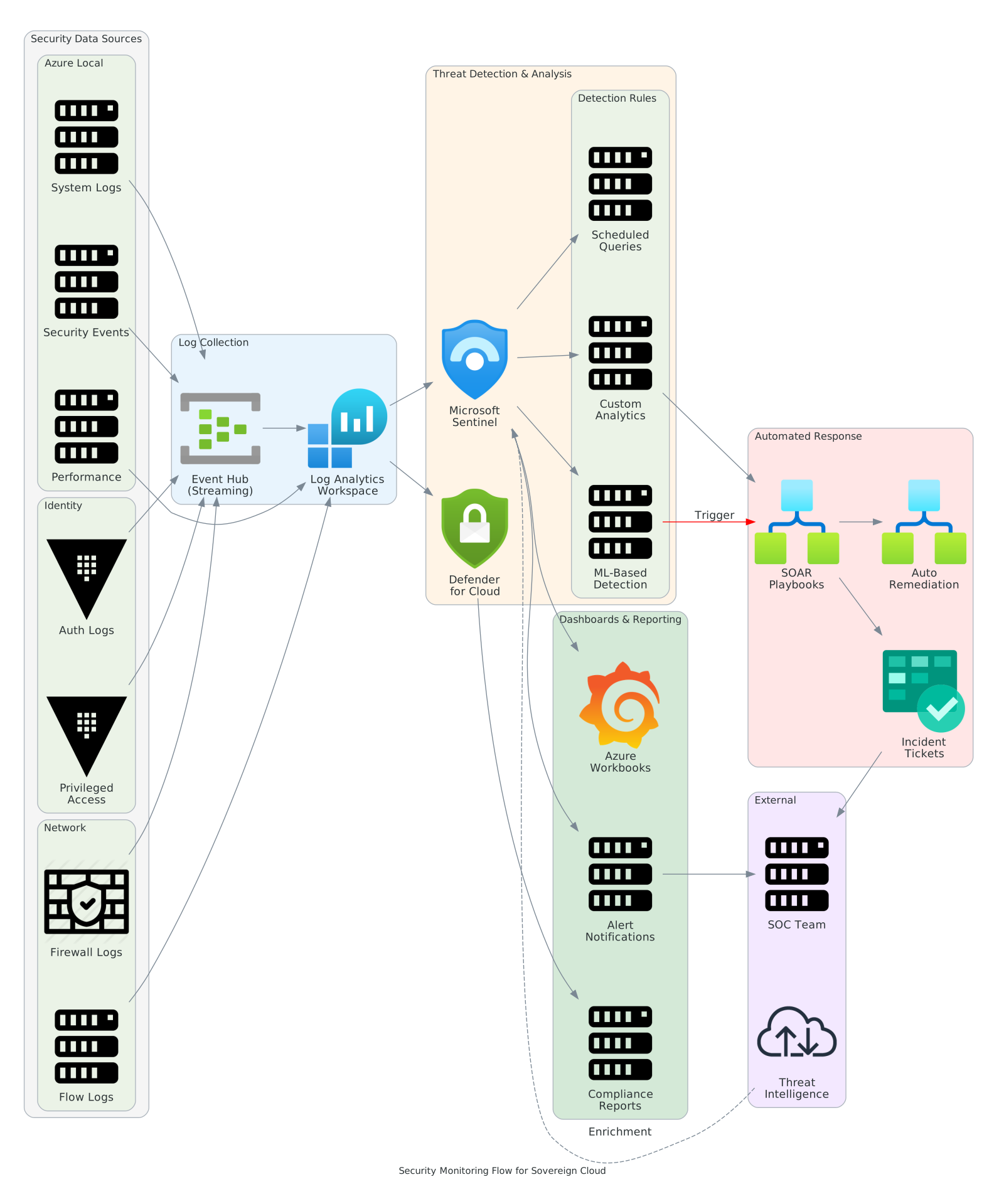 Figure 1: Zero Trust security monitoring and threat detection architecture
This page covers operational aspects of Zero Trust: monitoring, compliance automation, audit logging, and day-to-day operational procedures in sovereign cloud environments.
Monitoring Strategy
Continuous Monitoring Requirements
FedRAMP: Continuous, automated monitoring with monthly analysis
GDPR: Real-time monitoring of data access; yearly audits
HIPAA: Continuous monitoring with immediate alerting
ITAR: Daily review of controlled data access
Key Metrics to Monitor
User Access Metrics:
- Authentication attempts (success/failure rates)
- MFA challenges (frequency, challenge types)
- Failed access attempts (by user, resource, pattern)
- Unusual access times (outside normal hours)
- Geographic anomalies (impossible travel)
Device Metrics:
- Compliance status changes
- Operating system version distribution
- Antimalware/antivirus status
- Encryption status
- Device age and lifecycle
Network Metrics:
- VPN/SD-WAN connection patterns
- Connection duration and frequency
- Geographic origin of connections
- Network bandwidth usage
- Anomalous network behavior
Application Metrics:
- API call rates (by user, app, resource)
- Error rates by application
- Response times
- Rate limit violations
- Authentication failures at app layer
Data Access Metrics:
- Access patterns (normal baseline)
- Large data transfers
- Unusual access times
- Sensitive data access
- Export/download activities
Compliance Automation
Automated Audit Logging
What to Log:
- All authentication attempts (success/failure)
- All authorization decisions (grant/deny)
- All data access (who, what, when)
- All configuration changes
- All administrative actions
Log Retention:
- FedRAMP: 6-12 months minimum, 3 years recommended
- GDPR: 3 years minimum for compliance
- HIPAA: 6 years minimum
- ITAR: 7 years minimum
Log Security:
- Logs stored in secure, replicated storage
- Log integrity protection (tamper detection)
- Encryption in transit and at rest
- Audit trail for log access itself
Compliance Reporting
Monthly Reports:
- Access activity summary
- Security incidents and responses
- Policy violations
- Configuration changes
- Performance metrics
Annual Audits:
- Comprehensive control assessment
- Effectiveness validation
- Gap identification
- Remediation planning
Incident Response:
- Immediate notification (24-48 hours)
- Investigation documentation
- Root cause analysis
- Remediation and follow-up
Operational Procedures
Access Review Cycles
Daily:
- Monitor alerts and anomalies
- Verify high-risk access attempts
- Check for policy violations
Weekly:
- Review failed access attempts
- Analyze access patterns
- Update risk assessments
Monthly:
- Access entitlement review
- Policy effectiveness assessment
- Compliance status review
Quarterly:
- Comprehensive access audit
- Entitlement recertification
- Policy updates and refresh
Incident Response
Alert Triggering:
- Multiple failed authentication attempts
- Impossible travel detection
- Anomalous data access
- Policy violations
- Compliance violations
Investigation Steps:
- Alert confirmation and severity assessment
- User/device verification
- Access pattern review
- Activity timeline reconstruction
- Business context verification
Response Actions:
- Session termination (if high risk)
- Account lockdown (if compromised)
- Device isolation (if infected)
- Credential reset (if exposed)
- Data access revocation
Documentation:
- Incident log entry
- Timeline documentation
- Evidence preservation
- Follow-up actions
Sovereign-Specific Compliance
Data Residency Compliance
Policy: All identity and access data must stay within sovereign boundary
Implementation:
- Identity provider in sovereign boundary
- All policy enforcement local
- Audit logs stored locally
- No data export to cloud
Verification:
- Regular audits of data location
- Network flow analysis
- Policy compliance checks
- Customer-visible audit reports
Customer Control & Transparency
Policy: Customer maintains explicit control over access policies
Implementation:
- Customer-defined access policies
- Customer approval workflows
- Policy change history (customer visible)
- Access logs available to customer (real-time)
Verification:
- Policy audit trail
- Access log audits
- Configuration change tracking
- Customer attestation
Air-Gap Operational Procedures
Monitoring Without Cloud:
- Local monitoring agents collect data
- Periodic export of logs (secure transfer)
- Local analysis and alerting
- Offline compliance validation
Audit Procedures:
- Local audit execution (no cloud dependency)
- Offline report generation
- Manual review and approval
- Documentation storage (local)
Compliance Frameworks in Detail
FedRAMP Compliance
Key Controls (AC - Access Control):
- AC-1: Access control policy
- AC-2: Account management
- AC-3: Access enforcement
- AC-4: Information flow enforcement
- AC-20: Use of external information systems
Continuous Monitoring (CM-3):
- Monthly access reviews
- Automated audit logging
- Vulnerability scanning
- Configuration compliance
GDPR Compliance
Key Articles:
- Article 5: Lawful, fair processing; storage limitation
- Article 6: Lawfulness of processing
- Article 32: Security measures
- Article 35: Data Protection Impact Assessment
Access Control Requirements:
- Individuals’ access to their data
- Data deletion upon request (“right to be forgotten”)
- Data portability on request
- Consent verification for processing
HIPAA Compliance
Key Rules (45 CFR §164.308):
- Access controls
- Audit controls
- Integrity controls
- Transmission security
Access Control Measures:
- Unique user identification
- Role-based access control
- Automatic logoff after inactivity
- Encryption for all data at rest and in transit
ITAR Compliance
Key Requirements (22 CFR Part 120-130):
- U.S. person verification
- Controlled technical data access restrictions
- Export control compliance
- Storage in approved jurisdictions
Access Control Implementation:
- U.S. citizenship/residency verification
- Nationality screening
- Controlled data labeling
- Access restrictions by data type
Next Steps
- Ready for hands-on implementation? Lab: Implement Zero Trust →
- Return to Module Overview →
- Continue to Module 2: Azure Local at Scale - Connected
Last Updated: October 2025