Cloud Deployment Models
Table of contents
- Table of contents
- Overview
- Public Cloud
- Private Cloud
- Hybrid Cloud
- Multi-Cloud
- Deployment Model Comparison
- Decision Framework
- Real-World Examples
- Migration Strategies
- Summary
- Next Steps
- Additional Resources
Overview
Cloud deployment models define where cloud infrastructure is located, who has access to it, and how it’s managed. Understanding these models is essential for designing solutions that meet sovereignty, security, and compliance requirements.
View Diagram: Cloud Deployment Architectures
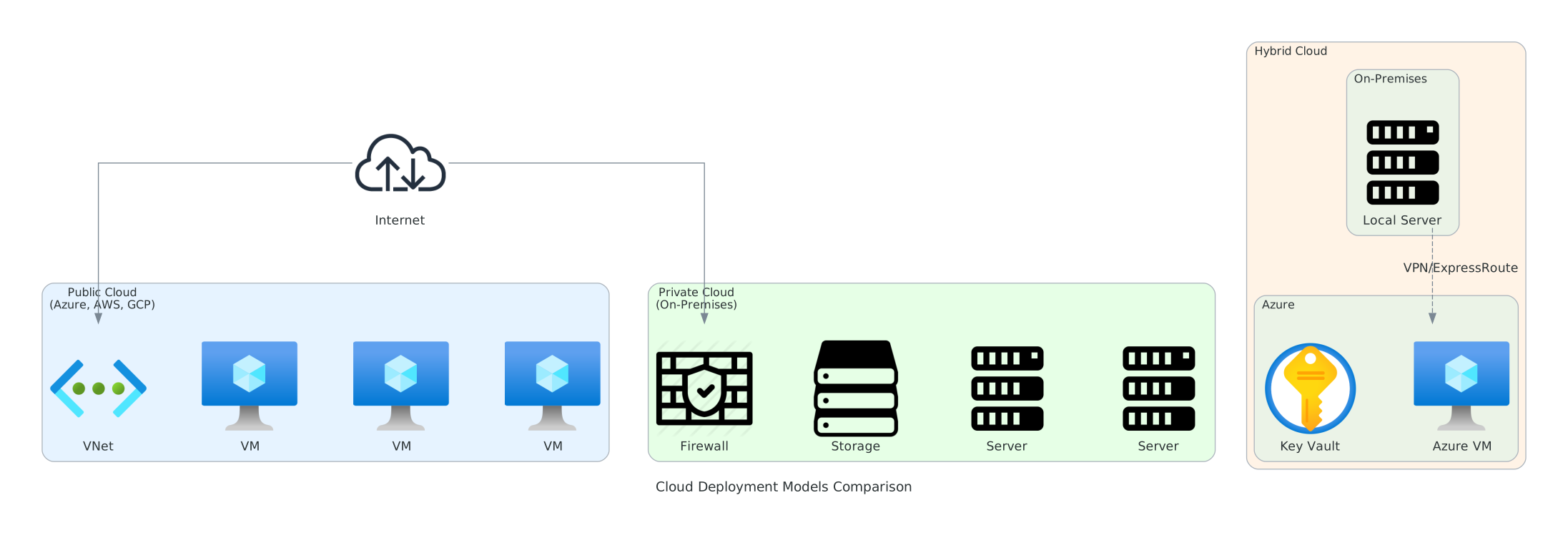 Figure 1: Cloud deployment model architectures and their relationships
View Diagram: Cloud Deployment Models Overview
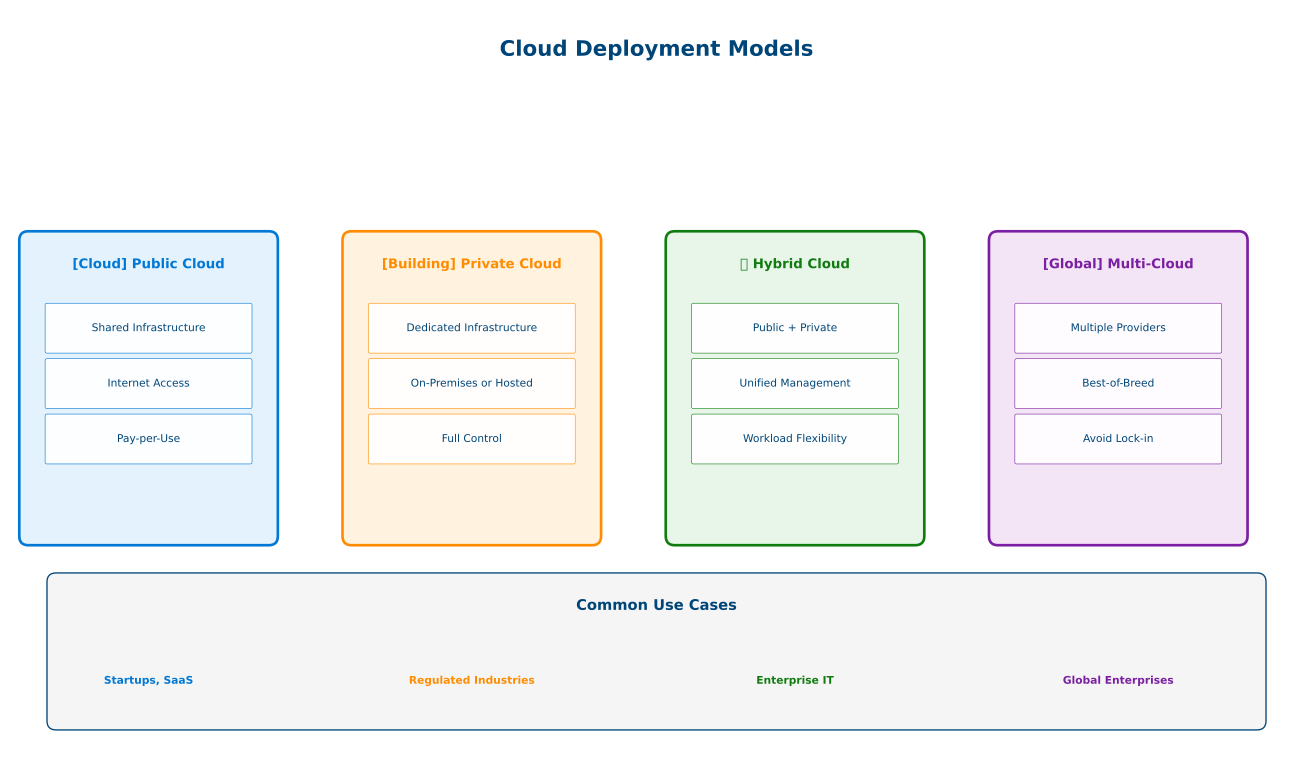 Figure 2: Four primary cloud deployment models and their characteristics
Public Cloud
Definition
Services delivered over the public internet and shared across organizations. Resources owned and operated by third-party providers (Microsoft Azure, AWS, Google Cloud).
Key Characteristics
- Multi-tenant architecture with shared infrastructure
- Internet-based access with global availability
- Provider-managed infrastructure and operations
- Pay-per-use pricing model
Advantages
- No upfront capital investment
- Virtually unlimited scalability
- 99.9%+ uptime SLAs
- Access to latest technologies
Challenges
- Limited control over data location
- Compliance complexity for regulated industries
- Internet connectivity dependency
Ideal Use Cases
Web applications, development/testing, big data analytics, backup/DR, collaboration tools
Private Cloud
Definition
Dedicated infrastructure for a single organization, located on-premises or hosted by provider.
Key Characteristics
- Single-tenant with dedicated resources
- Enhanced security with isolated environment
- Customizable to specific requirements
- Performance predictability with no “noisy neighbors”
Types
On-Premises: Organization’s data center, full control Hosted: Provider-managed, dedicated hardware Virtual Private Cloud (VPC): Isolated section within public cloud
Advantages
- Complete security and compliance control
- Predictable performance
- Full customization capabilities
Challenges
- Higher capital investment
- Limited scalability
- Full management responsibility
Ideal Use Cases
Regulated industries (healthcare, finance), sensitive data, mission-critical applications
Examples: Azure Stack HCI, Azure Local (disconnected), VMware Private Cloud
Hybrid Cloud
Definition
Combines public and private clouds, enabling data and application sharing while maintaining distinct boundaries.
Key Characteristics
- Multi-environment integration with unified management
- Workload portability between environments
- Flexible resource allocation for optimal placement
Common Patterns
Cloud Bursting: Scale to public cloud during peak demand Data Locality: Keep sensitive data on-premises, use cloud for processing Disaster Recovery: Primary on-premises, backup/DR in cloud
Advantages
- Workload flexibility and gradual migration
- Cost optimization (base in private, burst to public)
- Balance compliance with innovation
- Access to latest cloud services
Challenges
- Multi-environment complexity
- Network connectivity requirements
- Cross-platform expertise needed
Ideal Use Cases
Gradual cloud migration, variable workloads, compliance with innovation needs, DR/business continuity
Technologies: Azure Arc, Azure Local (connected), AWS Outposts, Google Anthos, VMware Cloud Foundation
Multi-Cloud
Definition
Using services from multiple cloud providers simultaneously to avoid vendor lock-in or leverage best-of-breed capabilities.
Key Characteristics
- Multiple providers with diverse technology stacks
- Best-of-breed service selection
- Distributed architecture across clouds
Common Strategies
Diversified Portfolio: Different apps on different clouds Active-Active: Same apps on multiple clouds for redundancy Specialized Services: Best capabilities from each provider
Advantages
- Avoid vendor lock-in
- Increased resilience and redundancy
- Optimize service selection per use case
Challenges
- Management complexity across platforms
- Multi-platform expertise required
- Integration and data transfer complexity
- Multiple billing relationships
Ideal Use Cases
Vendor independence strategy, global enterprises, high-availability needs, specialized service requirements
Deployment Model Comparison
| Aspect | Public Cloud | Private Cloud | Hybrid Cloud | Multi-Cloud |
|---|---|---|---|---|
| Cost | Low | High | Medium | Variable |
| Control | Low | High | Medium | Medium |
| Scalability | High | Limited | High | High |
| Security | Shared | Dedicated | Mixed | Variable |
| Compliance | Standard | Custom | Flexible | Complex |
| Management | Simple | Complex | Medium | Complex |
Decision Framework
Choosing the Right Model
Public Cloud: Cost optimization, standard compliance, rapid scaling, limited IT resources Private Cloud: Data sovereignty, regulated industry, predictable workloads, custom security Hybrid Cloud: Gradual migration, variable workloads, data locality + cloud benefits Multi-Cloud: Vendor independence, best-of-breed services, high availability
Key Assessment Areas
Regulatory: Data residency, compliance frameworks, data sensitivity Technical: Performance needs, workload predictability, integration requirements Business: Risk tolerance, cost priorities, vendor independence Organizational: IT expertise, scaling speed, complexity tolerance
Real-World Examples
Financial Services (Hybrid): Core banking in private cloud, web/analytics in public cloud Healthcare (Private + SaaS): Patient records private, collaboration tools SaaS Global Retailer (Multi-Cloud): AWS for e-commerce, Azure for AI, Google for data warehouse Startup (Public): Single provider, maximize SaaS/PaaS for rapid scaling
Migration Strategies
Cloud-Native: Build new apps in cloud directly Lift-and-Shift: Move existing apps with minimal changes Modernization: Refactor for cloud-native architectures Hybrid-First: Keep critical systems on-premises, gradual migration
Summary
Cloud deployment models provide different approaches to leveraging cloud benefits while meeting specific requirements:
- Public Cloud offers maximum cost efficiency and scalability
- Private Cloud provides maximum control and customization
- Hybrid Cloud balances control with cloud benefits
- Multi-Cloud maximizes choice and reduces vendor dependence
The optimal approach depends on your specific requirements for cost, control, compliance, and complexity tolerance.
Next Steps
- ✅ Review deployment model characteristics and trade-offs
- ✅ Assess which models align with your organization’s needs
- ✅ Continue to Cloud Benefits and Considerations
- ✅ Complete the Knowledge Check after all Module 1 content
Additional Resources
Last Updated: November 2025