Identity and Access Basics
Overview
Identity and Access Management (IAM) is the foundation of cloud security, controlling who can access what resources and under what conditions.
View Diagram: Authentication vs Authorization Flow
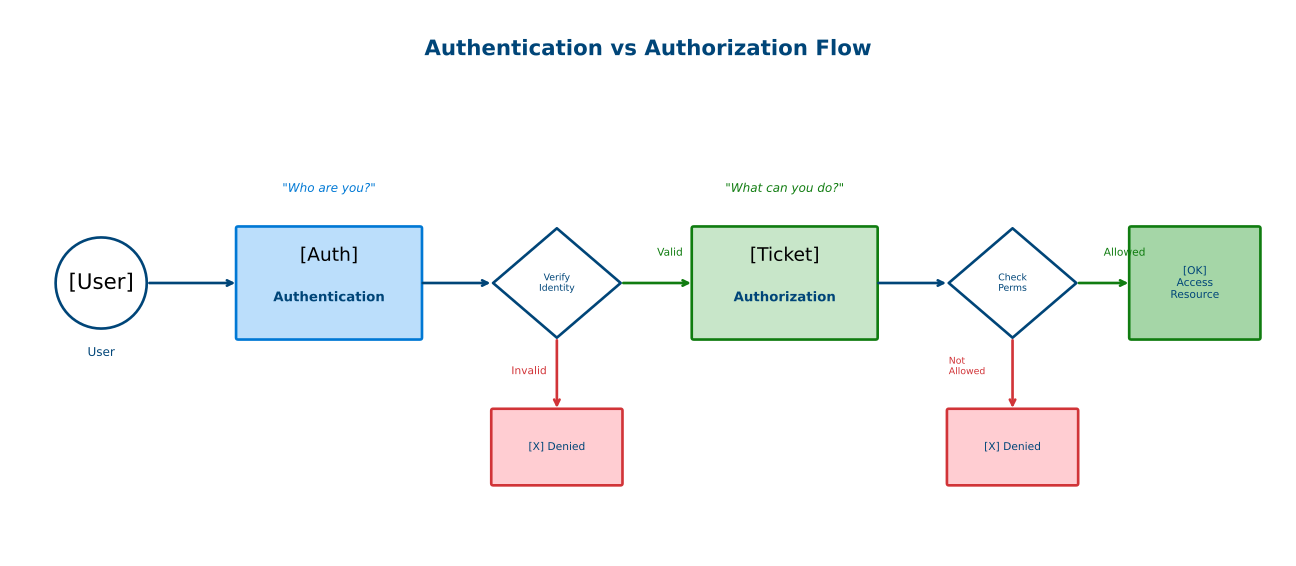 Figure: Authentication verifies identity; Authorization determines permissions
Core Concepts
Authentication vs Authorization
- Authentication: Verifying identity (“Who are you?”)
- Authorization: Determining permissions (“What can you do?”)
Identity Types
- Human Identities: Users, administrators, developers
- Service Identities: Applications, services, APIs
- Device Identities: Computers, mobile devices, IoT devices
Authentication Methods
Single-Factor Authentication
- Passwords, PINs, security questions
- Vulnerable to compromise
- Not recommended for sensitive systems
Multi-Factor Authentication (MFA)
- Knowledge: Something you know (password)
- Possession: Something you have (phone, token)
- Inherence: Something you are (biometrics)
Modern Authentication
- OAuth 2.0 and OpenID Connect protocols
- Token-based authentication
- Single sign-on (SSO) capabilities
Access Control Models
Role-Based Access Control (RBAC)
- Permissions assigned to roles
- Users assigned to roles
- Simplifies permission management
Attribute-Based Access Control (ABAC)
- Dynamic permissions based on attributes
- Context-aware access decisions
- Fine-grained control capabilities
Just-in-Time (JIT) Access
- Temporary elevated permissions
- Time-bound access grants
- Reduces standing privileges
Identity Governance
Access Reviews
- Regular review of user permissions
- Removal of unused access
- Compliance with least privilege
Lifecycle Management
- User onboarding and offboarding
- Role changes and transitions
- Automated provisioning and deprovisioning
Cloud Identity Considerations
Federation
- Trust relationships between identity providers
- Single sign-on across multiple systems
- Centralized identity management
Zero Trust Architecture
- Never trust, always verify
- Continuous authentication and authorization
- Assume breach mentality
Next Steps
Complete the Security & Compliance Knowledge Check to test your understanding.
Last Updated: November 2025